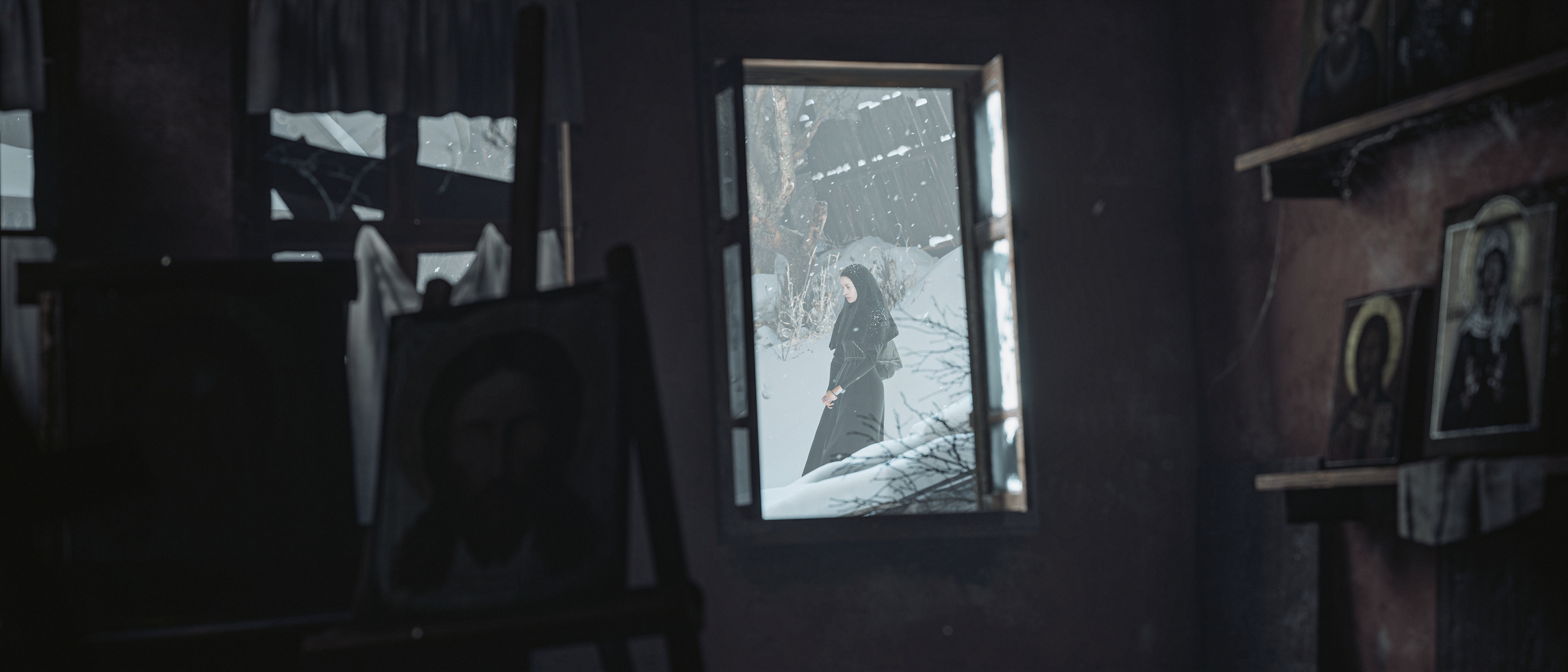
how it all started – a shot on a screen
before i even touched INDIKA, i saw a photograph. not a screenshot – a photograph. i was just starting to discover the FRAMED community, clicking through the Hall of FRAMED for the first time and just staring at everything with my jaw on the floor. and then i landed on some shots from INDIKA, taken by shkegulka, and i genuinely froze. the way those images were composed, the mood they carried, the expressions captured – it didn’t feel like someone pressed a button in a game. it felt like real photography. artistic, deliberate, emotional. i’d never seen virtual photography that expressive before. i bookmarked everything and went straight to add INDIKA to my wishlist.
that was the moment, honestly. not just for this game – but for virtual photography as a whole. i’ll come back to that at the end.
the bucket. the beginning. the vibe check
so i booted up INDIKA for the first time and within the first fifteen minutes i was already on a Discord call, screensharing the game with a friend, going “you wanna watch this?” and his reaction was exactly what i expected: “…is this a water bucket simulator?” because yeah, the game opens with Indika, a young nun at a monastery in 19th century Russia, carrying a bucket. back and forth. in the snow. in silence. with the devil whispering in her ear.
and somehow that was the perfect introduction. Odd Meter, the small indie studio formerly based in Moscow (now in Kazakhstan), built this whole world that deliberately starts slow, mundane, almost painfully boring – and that contrast is the entire point. the tedium of Indika’s convent life isn’t an accident. it’s the setup. because when the world finally opens up and things start to get genuinely weird and dark and funny and heartbreaking all at once, the contrast hits so much harder.
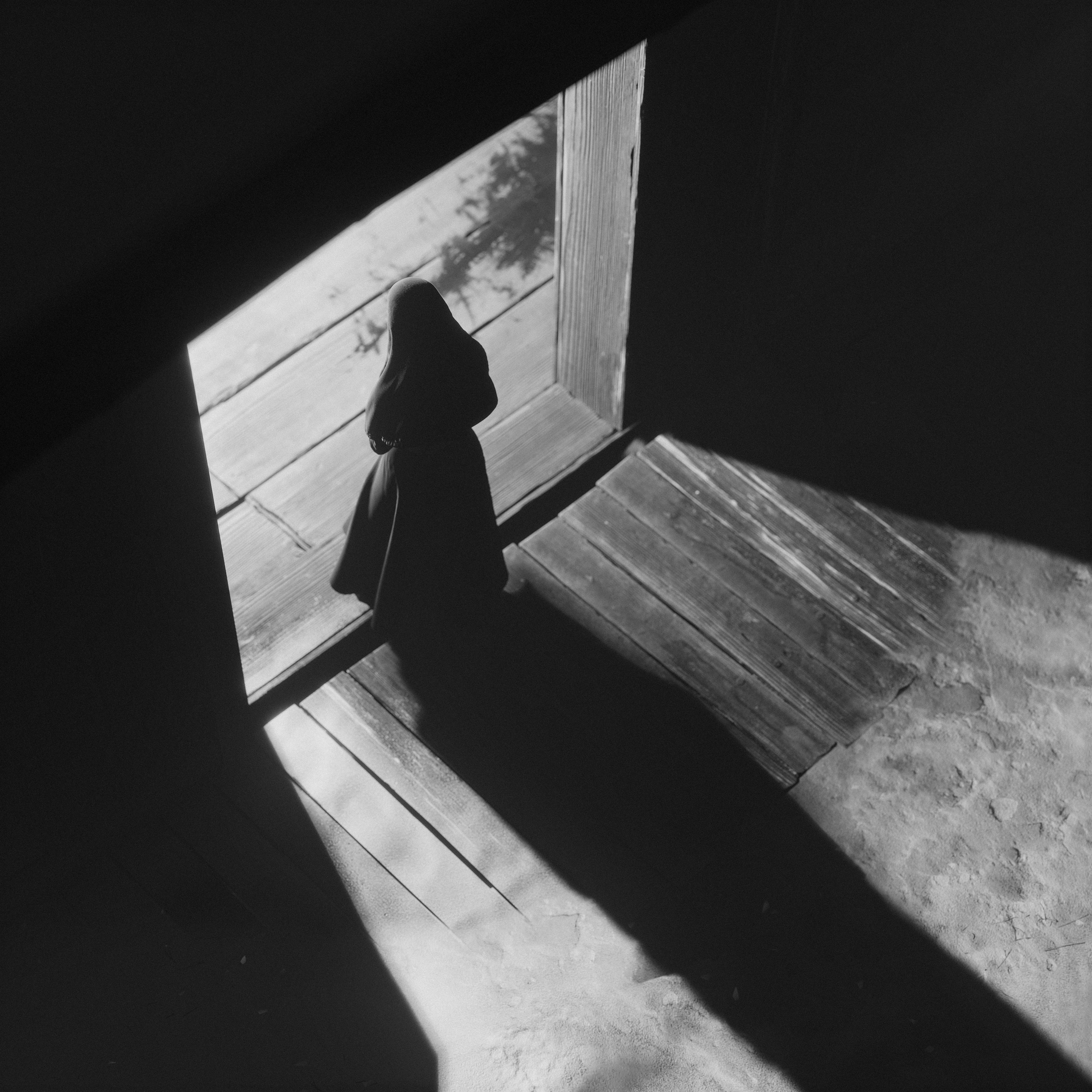
what INDIKA actually is
INDIKA is a third-person story-driven game, set in a distorted version of Russia at the turn of the 19th century, where religious oppression, surreal imagery and dry dark humor collide in a way that feels completely unlike anything else. the protagonist is Indika – a young nun who, depending on how you read the game, either literally speaks to the devil or is just someone whose own suppressed mind is eating her alive from the inside. the game never tells you which one. and that ambiguity is kind of the whole point.
she’s eventually sent out of the monastery to deliver a letter and along the way she meets Ilya – an escaped convict with one arm who believes he was touched by a miracle from God. together they wander through a bleak, fog-covered Russia that feels half historical, half fevered nightmare. and the conversations between them are where the game truly lives. the writing is sharp, poetic and devastating in places. discussions about faith, guilt, shame, free will, trauma and love surface naturally through dialogue that never feels forced or preachy – even when the game is quite literally having a conversation about the nature of the soul.
the voice acting – both in English and Russian – is genuinely excellent. Indika’s voice in particular carries an entire character arc in its tone alone. she’s not the kind of protagonist who explains herself. you just notice things about her slowly, through small details, a shadow on a wall, a line she says quietly, a moment she hesitates. i found myself rewinding scenes just to sit in them a bit longer.
the gameplay – functional, quirky, intentionally weird
mechanically, INDIKA is a fairly linear third-person platformer with puzzle elements. you move through environments, push crates, climb ledges, solve relatively simple puzzles. the game clocks in at around 4–5 hours, which is short – but it earns every minute of that runtime without overstaying its welcome.
the most interesting gameplay mechanic is the prayer system. there are moments where Indika’s internal monologue overwhelms her – the screen starts cracking, the world bleeds red, the devil takes over – and the only way to stabilize is to pray, which snaps reality back together. this isn’t just a visual effect though. some sections require you to literally alternate between the “sinful” fractured state and the “normal” state to navigate puzzles, because each version of the world has different platforms and paths available. it’s a clever metaphor built into the actual controls.
then there’s the XP system. you collect points throughout the game, level up, unlock things in a skill tree. nodes are labeled things like “grief”, “guilt”, “shame”. and then a loading screen message tells you, plainly: this is all pointless. the whole progression system is a joke at the expense of video game conventions – and somehow that makes it more meaningful, not less.
the flashback sequences swap to a 16-bit pixel art aesthetic with chiptune music, which sounds jarring on paper but works beautifully as a tonal break. the most chaotic segment – a fish factory where you’re navigating a conveyor belt of enormous dead fish that will knock you into an abyss – was absolutely unhinged and i loved every second of it.
the puzzles themselves are on the easier side and the game can feel slow in some stretches. but like Eurogamer put it in their review, INDIKA is ultimately a mood piece. the “boring” parts are part of the texture of the experience.
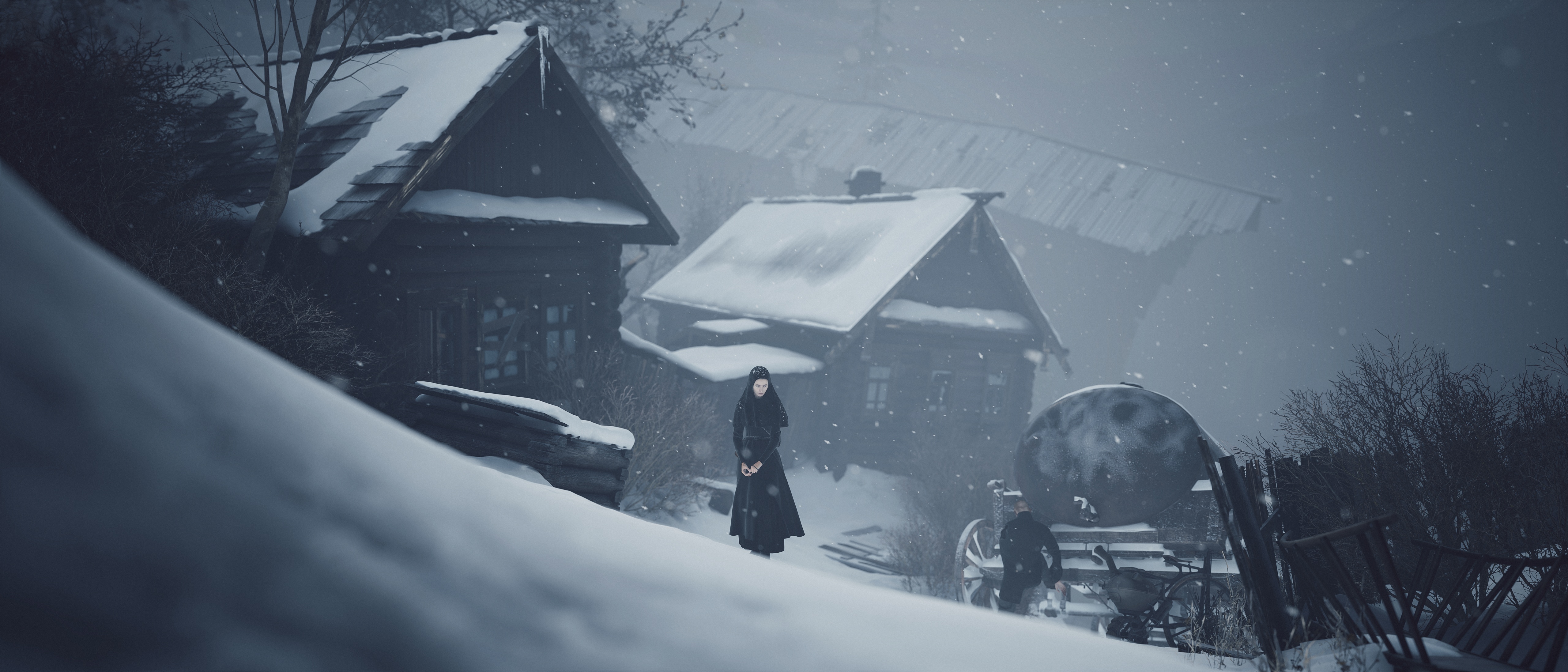
visuals, atmosphere, and the feeling of cold
INDIKA looks stunning in a deliberately bleak way. the world is almost entirely muted – grey skies, white snow, dark silhouettes, weathered architecture. Indika’s dark habit against the endless white snowscape creates this visual isolation that follows her everywhere. and then suddenly there’s a massive iron factory belching smoke in the distance, or a crumbling bridge stretching into fog, or a building that shouldn’t exist in this world existing anyway.
Odd Meter clearly puts aesthetics at the absolute forefront – and the result is a game that functions beautifully for virtual photography. the lighting, the geometry, the way characters are framed in cutscenes – it all photographs exceptionally well. which is part of why shkegulka’s shots from this game hit so hard.
the lines that stopped me
i said at the beginning that some games have lines that feel like they were written specifically for you. INDIKA has several of those. i don’t want to spoil them because they land hardest in context, but there were moments mid-playthrough where Indika said something – quietly, almost to herself – and i just put the controller down and sat with it for a minute. the kind of writing that reflects something true about how shame works, or how people perform faith without feeling it, or how we carry our upbringing in ways we can’t fully see.
and here’s the thing – i’m not religious. not even close. for a long time i was the kind of person who rolled their eyes at anything religion-adjacent, dismissed the whole thing as nonsense, and had very little patience for anyone who brought it up. i was genuinely that person. but somewhere along the way, something shifted. and a big part of that shift came from my mom.
she’s very religious. always has been. and for years i was the one sitting across the table going “come on, really?” – lowkey dismissive, not understanding why any of it mattered. but at some point i stopped and actually looked at what faith does for her. it keeps her going. it gives her something to hold onto on the bad days. it’s a light she carries around with her. and who am i to take that away or call it worthless? i started offering understanding instead of judgment, and honestly, i’m glad i did. now i genuinely mean it when i say i’m happy she has something like that in her life – something that keeps her on her feet.
INDIKA doesn’t resolve any of this stuff neatly either. it doesn’t tell you religion is bad or that god doesn’t exist or that faith is weakness. it sits with the contradiction – that belief can be a cage and a comfort at the same time, that guilt and love can come from the same place, that people are more complicated than the systems that shaped them. it’s the most honest thing i’ve seen a game do with this topic. and i think i could only fully appreciate that because i’d already started figuring it out in real life.
Odd Meter’s creative director Dmitry Svetlow has spoken publicly about the invasion of Ukraine and his perspective on Russia – and while the game doesn’t hit you over the head with politics, there’s an undercurrent of something in INDIKA about youth trapped under oppressive structures, desperately searching for meaning and selfhood. it adds weight.
this game, at a surface level, is quirky and weird and funny. at its actual level, it’s about something much deeper. and the best thing it does is carry both of those things at the same time, without either one canceling the other out.

the turns i did not see coming
i want to be vague here so i don’t ruin anything – but INDIKA has plot developments i genuinely did not anticipate. not in a twist-for-the-sake-of-twist way, but in a way that recontextualizes things you already saw and makes you feel the emotional weight more than you expected to. the ending in particular is the kind of abrupt, devastating conclusion that critics have called both infuriating and unforgettable. i’m in the unforgettable camp. it stayed with me for days.
the shot on my wall
here’s the thing about INDIKA and me. the game itself is special. but the reason it means as much as it does to me isn’t just the game – it’s what finding it represented.
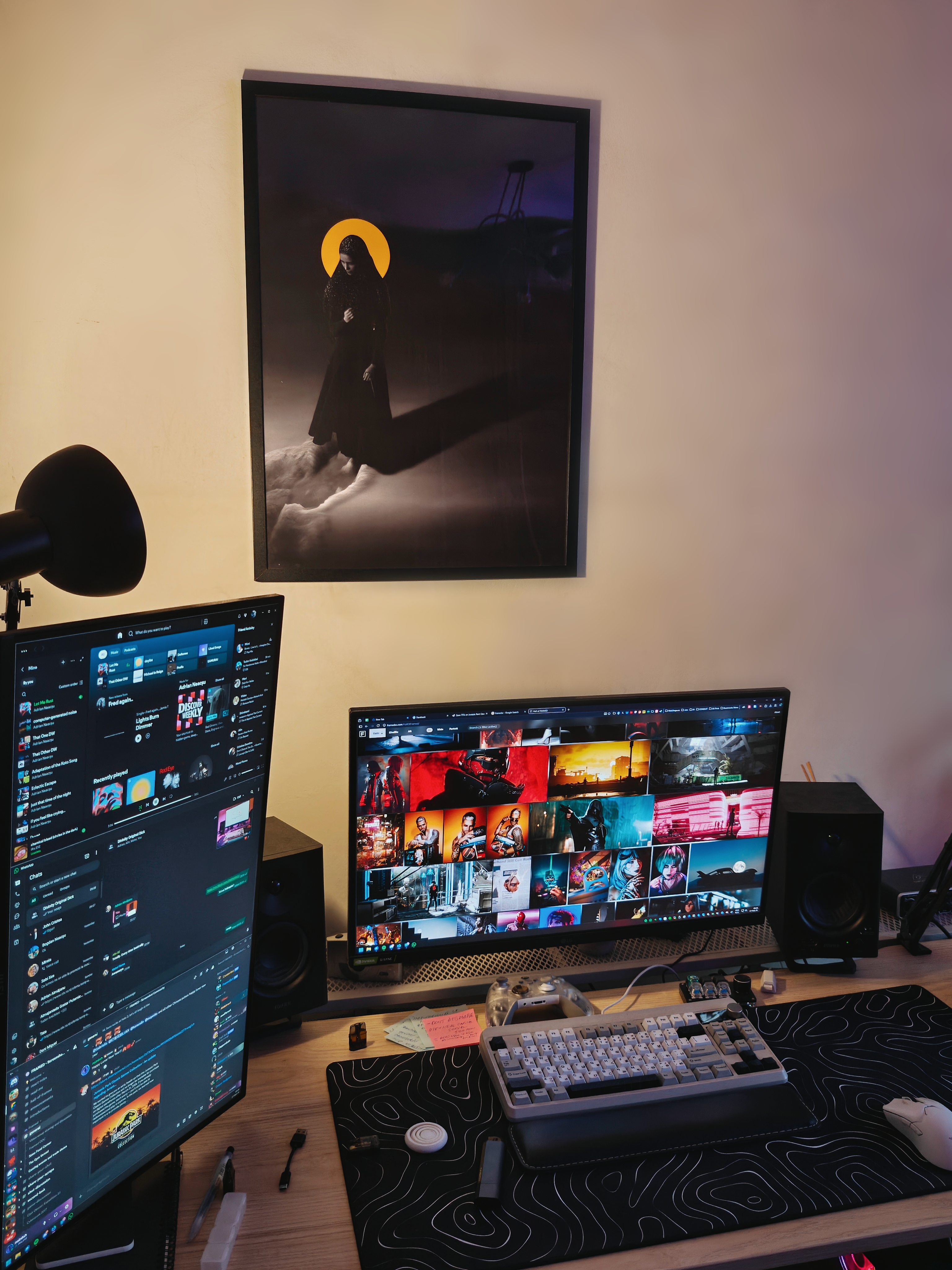
when i first stumbled into the FRAMED community and started exploring virtual photography, i was still in that early phase of not really knowing what the medium could be. and then i found shkegulka’s gallery. specifically, this shot from INDIKA. i remember exactly the feeling of looking at it. not “oh cool screenshot” but more like: this is a photograph. this is art. you can do this in a video game.
that single image was a turning point for me. it showed me more clearly than anything else i’d seen at the time what virtual photography could actually be – what the ceiling looked like, what was possible when someone approached it with real artistic intent. it pulled me deeper into FRAMED, into the community, and eventually into doing it seriously myself. the people i’ve met there since, the creativity i get to witness daily, the friends i’ve made – a lot of that traces back to a single shot from INDIKA that stopped me mid-scroll.
so i had it printed. it’s on my wall now. and every time i look at it, it reminds me of where that rabbit hole started.
should you play it
yes. unconditionally, if you’re into narrative games that treat you like an adult. INDIKA earned an 80 on Metacritic, a Very Positive rating on Steam (89% positive across 6,000+ reviews), and won the Game Designer Prize by CESA at the Tokyo Game Show. but honestly, none of those numbers are why you should play it.
you should play it because it’s one of the most genuinely original games to come out in years. because it will make you laugh at a bucket and make you feel hollow twenty minutes later. because the writing is honest in a way a lot of games are afraid to be. and because even if not every line hits or every puzzle lands, the overall experience is something that sticks.
it’s short enough that there’s no excuse not to. give it one evening. see what happens.

// comments